


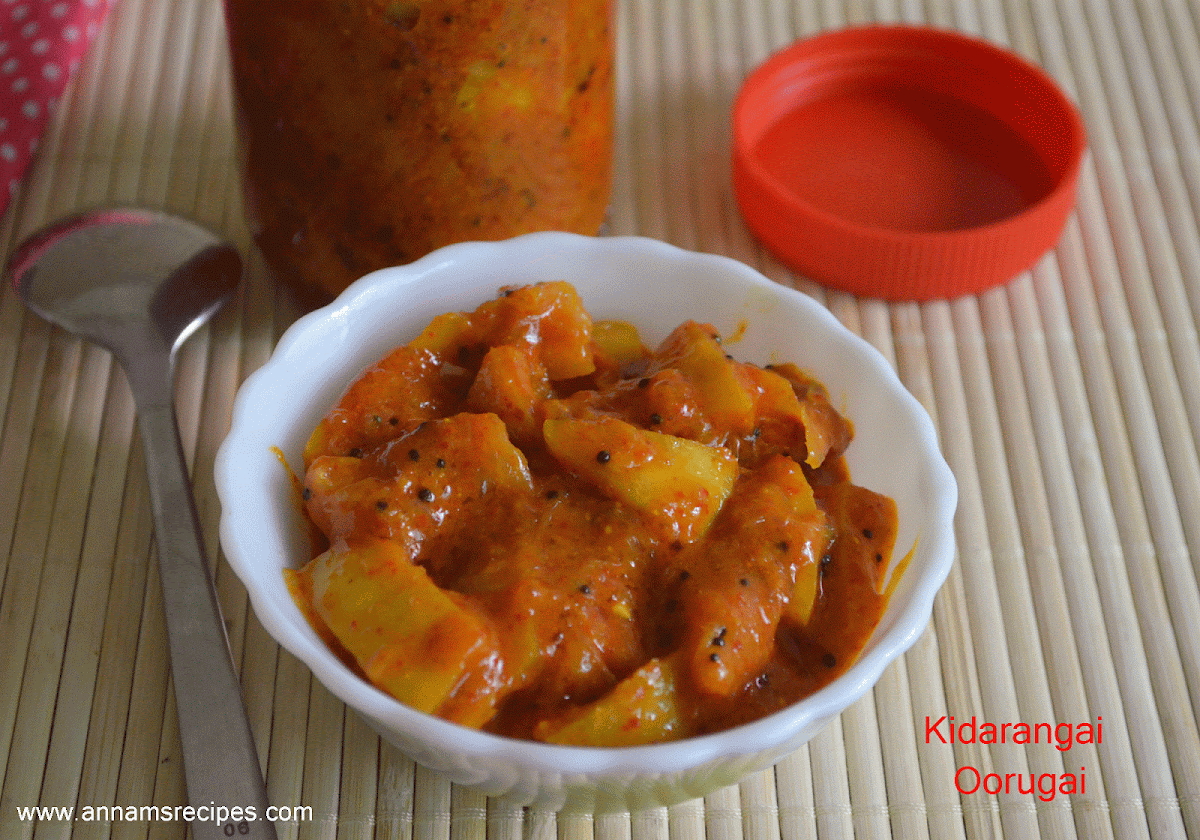
Kidarangai oorugai is a traditional Chettinad wild lemon pickle. Kidarangai (wild lemon) pieces are salted with rock salt and turmeric for a few days, then mixed with a roasted powder of red chilli, fenugreek and asafoetida and finished with a gingelly oil and mustard tempering. This tangy kidarangai pickle is a classic side for curd rice.
Ten to twenty years back, Chettinad weddings always served a variety of pickles – kidarangai oorugai, manga oorugai and pala oorugai. My mother told me how they used to hunt for kidarangai to make pickle for weddings. Today most of us buy pickles from the store, but making this wild lemon pickle at home is really easy. When I spotted kidarangai at my vegetable shop, I asked my mother for her recipe – here it is.


🧺 Kidarangai Oorugai Ingredients
| Ingredient | Quantity |
|---|---|
| 🍋 Kidarangai (wild lemon), cut | 3 cups |
| 🧂 Rock salt | ½ cup |
| 🟡 Turmeric powder | ½ tsp |
| 🌶️ Red chilli | 12 |
| 🟤 Fenugreek | 1 tsp |
| 🟠 Asafoetida | 1 tsp |
| 🛢️ Gingelly oil | 3 tblsp |
| ⚫ Mustard | 1 tsp |
🥘 How to Make Kidarangai Oorugai – Step by Step
Step 1Cut the kidarangai and mix with salt and turmeric
Wash the kidarangai and wipe it dry with a kitchen towel. Cut it into small pieces and discard the seeds. Powder the rock salt, add it to the wild lemon pieces along with the turmeric powder and mix well.

Step 2Rest in a ceramic jar for 2 to 3 days
Transfer the salted kidarangai to a ceramic container and keep it for two to three days. Stir it twice every day with a dry spoon so the pieces soften evenly in the salt.

Step 3Roast and grind the pickle masala
After three days, dry roast the fenugreek, asafoetida and red chillies in a frying pan. Cool and grind them to a powder in the mixie.

Step 4Add the masala and the mustard tempering
Add the ground powder to the salted kidarangai and mix well. Heat the gingelly oil in a frying pan and add the mustard seeds. When they crackle, switch off the stove, pour the tempering over the pickle and mix well.

Step 5Bottle the kidarangai pickle
Store the kidarangai oorugai in a clean, dry glass bottle. Serve it with curd rice.

✅ Tips for Kidarangai Oorugai
- ✔️Use red chillies according to your taste.
- ✔️The pickle tastes much better after 15 days, once the wild lemon soaks up the masala.
- ✔️Wipe the kidarangai completely dry before cutting – any water spoils the pickle.
- ✔️Remove every seed; the seeds make the pickle bitter.
🛠️ Problems and Fixes
| ❌ Problem | ✅ Fix |
|---|---|
| Pickle tastes too bitter | Let it rest longer – the bitterness mellows after about 15 days. Also make sure all seeds were removed. |
| Fungus or white layer on top | Moisture got in. Use a dry spoon, a dry bottle, and keep the pickle covered with oil. |
| Rind still hard | The salting time was too short. Stir twice a day and give it the full 3 days before adding masala. |
🍱 How to Store and Serve
- 📦Store: keep the kidarangai pickle in a clean glass bottle at room temperature and always use a dry spoon. It keeps for several months.
- ☕Serve: with curd rice, rasam rice or kanji – a little goes a long way.
For homemade pickles · swipe →


▶️ Kidarangai Oorugai Video

💬 Kidarangai Oorugai – Questions
What is kidarangai in English?
Kidarangai is known as wild lemon in English. It is a large, thick-skinned citrus fruit used in Chettinad homes mainly for pickles.
When is kidarangai pickle ready to eat?
You can eat it as soon as the masala and tempering are mixed in, but the wild lemon pickle tastes best after about 15 days.
Why is the kidarangai salted for 2 to 3 days first?
Resting in rock salt and turmeric softens the thick rind and draws out the juice, so the pieces absorb the roasted chilli-fenugreek masala well.


Leave a Reply